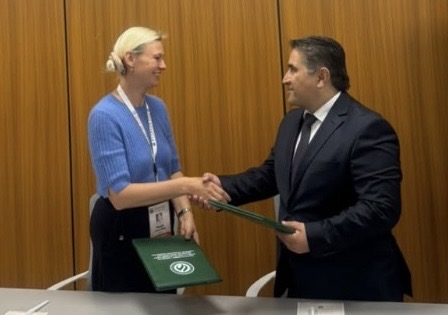

From 13 to 18 October 2026, Dushanbe, the capital of Tajikistan, became a meeting point for international cultures. Around 2,000 participants from more than 60 countries gathered for the “Sustainable Tourism and Cultural Heritage” forum. Among the guests were representatives from Bahrain, China, Iran, Iraq, India, South Korea, the United Kingdom, Turkey, Switzerland, Pakistan and Japan, as well as countries in the Middle East and on the Arabian Peninsula. High-ranking figures from politics, academia and the tourism sector also attended the event. The forum, held at the International University of Tourism and Entrepreneurship of Tajikistan, received support from government authorities. Tajikistan’s Deputy Prime Minister, Dilrabo Mansuri, was also present at the opening ceremony.
Garmisch-Partenkirchen was also in the spotlight at this international gathering: Natalie Osterfeld was invited to the forum by Tatjana Nikitina. Through her hands-on work with tourists, she brings practical experience from the tourism industry. At the event, she had the opportunity to introduce the Bavarian market town of Garmisch-Partenkirchen during a lecture for students, as well as a presentation to professors and an international professional audience at the National Library of Tajikistan.
She highlighted the cultural, scenic and tourism-related features that make Garmisch-Partenkirchen distinctive. The presentation attracted considerable interest. Lecturers and professors listened attentively. The thunderous applause and the many guests who approached her afterwards to take photographs demonstrated the positive response to her presentation.
The focus was not only on mountains and tourist attractions, but also on a key question for the future: How can a town of around 26,000 residents welcome five million day visitors and two million overnight guests every year while preserving its natural environment, hiking trails, culture and residents’ quality of life? Osterfeld presented how the destination’s tourism sector is organised and outlined its approaches to sustainable tourism. The experience of Garmisch-Partenkirchen demonstrated how the challenges of tourism can also be discussed in the context of other regions.
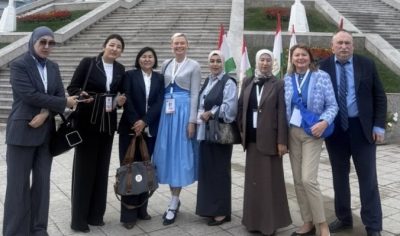
Yet it was not only the scale of the event that made Tajikistan impressive. Above all, it was the people who made the stay so special. Each international guest was accompanied by a student. Excursions to vineyards and agricultural areas offered insights into the country. The guests were welcomed with a warmth that extended far beyond the official programme.

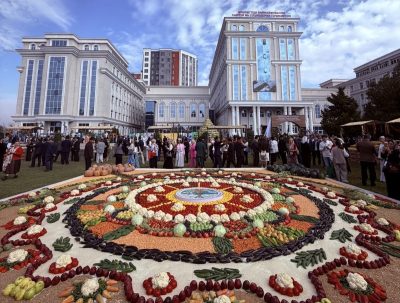
One of the highlights was the traditional Mehrgon harvest festival. Featuring regional produce, handicrafts, culinary specialities and living traditions, the festival celebrates the harvest and expresses gratitude to nature. In 2024, Mehrgon was included on UNESCO’s Intangible Cultural Heritage List. The festival gave international guests an insight into the culture and traditions of Tajikistan.
For Natalie Osterfeld, the presentation was an interesting experience. She was particularly pleased with the positive response from the audience. The thunderous applause and the guests who approached her afterwards to take photographs made it clear just how much interest her presentation of Garmisch-Partenkirchen had generated.
The international forum brought together people from different countries and provided an opportunity to exchange experiences in tourism and cultural heritage. Garmisch-Partenkirchen, too, was able to contribute its approaches and experience to the international discussion.